

Updated 18 September 2026
Start with a full-year view
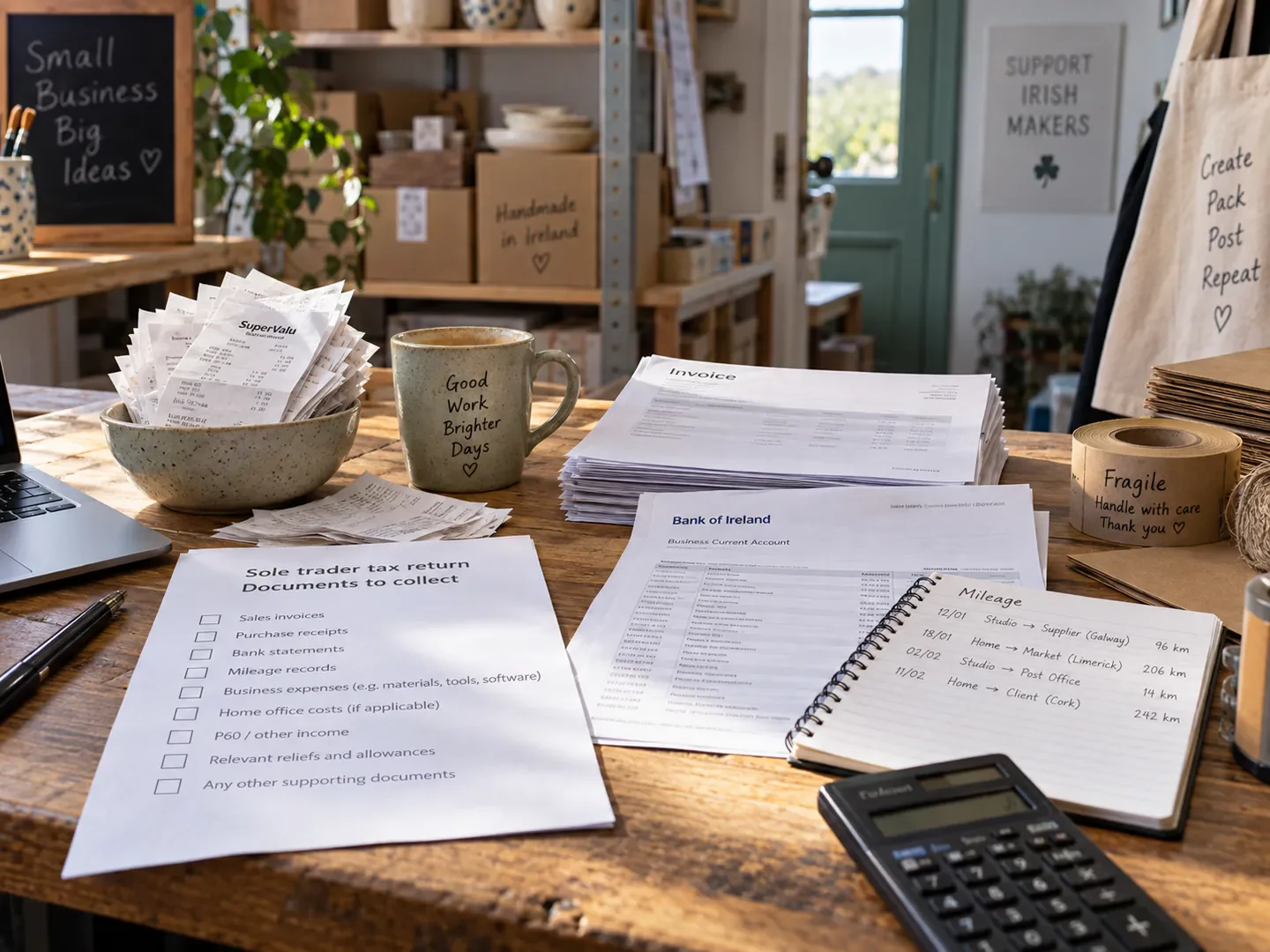
Gather records for the entire accounting period and keep business transactions separate from personal spending wherever possible. Your exact list will depend on the work you do.
Core records
- Sales invoices, platform statements and other income records.
- Purchase invoices, receipts and mileage or travel records.
- Business bank and credit card statements.
- Details of equipment, vehicles or other assets bought or sold.
- Loan statements and finance agreements.
- Payroll, subcontractor or Relevant Contracts Tax records where applicable.
- Previous tax returns, Revenue correspondence and preliminary tax information.
Do not wait for the deadline
Under self-assessment, the annual return, balance of tax for the previous year and preliminary tax for the current year form part of the same Pay and File cycle. An earlier review gives more time to resolve missing information and plan cash flow.
Official guidance
Revenue — guide to self-assessment
This article provides general information and is not a substitute for advice based on your circumstances.